

Categories: Manufacturing of chemical and pharmaceutical equipment
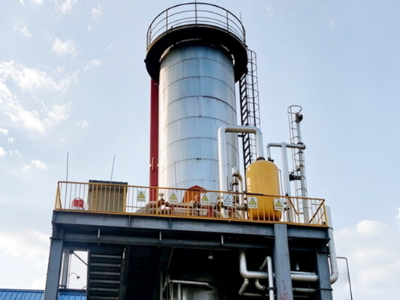
Also known as a packed‑bed reactor, it is a reactor loaded with solid catalysts or solid reactants to carry out heterogeneous reactions. The solids are generally granular with a particle size of approximately 2–15 mm, stacked to form a bed of a certain height (or thickness). The bed remains stationary while the fluid flows through it for reaction. It differs from fluidized‑bed reactors and moving‑bed reactors in that the solid particles stay static. Fixed‑bed reactors are mainly used for gas‑solid catalytic reactions. For gas‑solid or liquid‑solid non‑catalytic reactions, the bed is filled with solid reactants. The trickle‑bed reactor is also classified as a type of fixed‑bed reactor, in which gas and liquid phases flow downward concurrently through the bed to form gas‑liquid‑solid three‑phase contact.

There are three basic types of fixed‑bed reactors:
Axial Adiabatic Fixed‑bed Reactor: The fluid flows downward through the bed along the axial direction, and there is no heat exchange between the bed and the surroundings.
Radial adiabatic fixed‑bed reactor. The fluid flows radially through the bed, either in centrifugal flow or centripetal flow, and there is no heat exchange between the bed and the surroundings. Compared with axial reactors, radial reactors feature a shorter fluid flow path, larger flow cross‑sectional area and lower pressure drop. Nevertheless, the structure of a radial reactor is more complicated than that of an axial reactor. Both types above belong to adiabatic reactors. They are suitable for reactions with mild heat effects, or systems that can tolerate temperature changes induced by heat effects under adiabatic conditions.
The tubular fixed‑bed reactor consists of a large number of reaction tubes arranged in parallel. Catalysts are packed either inside the tubes or in the shell side. A heat‑carrying medium flows through the shell side or the tube side for heating or cooling. The tube diameter generally ranges from 25 mm to 50 mm, and the total number of tubes can reach tens of thousands. Tubular fixed‑bed reactors are suitable for reactions with high reaction heat effects. In addition, there are reactors formed by series combination of the above basic configuration, known as multi‑stage fixed‑bed reactors. For example, when the reaction releases or absorbs a large amount of heat or segmented temperature control is required, multiple adiabatic reactors can be connected in series to form a multi‑stage adiabatic fixed‑bed reactor. Heat exchangers or material feeding points are arranged between reactors for temperature regulation, so that the operation can be carried out under conditions close to the optimal temperature.

Advantages of fixed‑bed reactors:
It features low backmixing and effective contact between the fluid and catalyst. A fixed‑bed reactor can deliver high selectivity when the reaction is accompanied by consecutive side reactions.
Low mechanical attrition of catalyst.
Simple structure.
Company Name: Shijiazhuang AIHAN Chemical Technology Co., Ltd.
Room 2402, Unit 2, Building 1, Yudong International Mansion, No.148 Yuhua East Road, Yuhua District, Shijiazhuang City, Hebei Province
Telephone: 0311-85060660 / 0311-85652680
Copyright © Shijiazhuang Aihan Chemical Technology Co., Ltd. ICP Filing No.:Ji ICP No.19014796-1 Public Security Network Filing No.: Ji Wang An Bei 13010802002291


