

Categories: Manufacturing of chemical and pharmaceutical equipment
Working Principle
Vapor Mechanical Recompression Evaporation Technology (MVR) adopts a mechanical compressor (or fan) to recompress the secondary steam generated after evaporation and raise its enthalpy. The secondary steam with increased enthalpy is fed into the heating chamber again as a heat source to heat the incoming feedstock, and releases heat to condense into condensate for discharge. The heated material is vaporized and concentrated, then discharged from the system as the final product.
The MVR system requires no cooling water and consumes little or no live steam. Compared with traditional multi-effect evaporation systems, it offers unparalleled advantages in energy consumption and operating costs.

Main Components
Preheater
As an important component of the MVR system, the preheater recovers sensible heat from condensate and concentrated liquid whose temperature is higher than that of the raw feed. Without such heat recovery, the enthalpy supplied by the compressor alone cannot maintain the system’s heat balance without additional heat input.
Evaporator
The evaporator is the primary unit where materials are heated and vaporized. It is available in multiple types including falling film evaporator, rising film evaporator, self-circulating evaporator, forced circulation evaporator and plate evaporator. The selection of evaporator type depends on specific process requirements. If solids are generated during evaporation, the crystal growth process shall be comprehensively considered according to material properties to ensure crystals reach a required particle size for filtration or product specifications.
Compressor
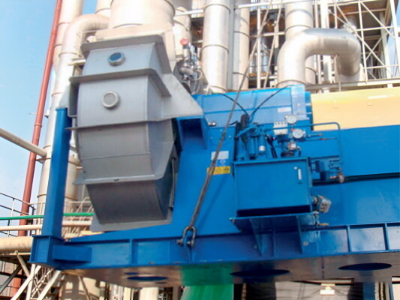
The compressor is the actuator for recompressing secondary steam. In theory, any mechanical compression equipment capable of boosting gas pressure can serve as the compressor for an MVR system.
Centrifugal compressors and Roots compressors are the most widely adopted types in current MVR evaporation systems.
Automatic Control System
The automatic control system mainly consists of five parts: sensor assembly, regulating actuators, PLC system, configuration software and control cabinet. An automatic control system is not mandatory for MVR evaporation systems. Nevertheless, a well-designed automatic control system can optimize the thermal balance of the process, reduce manual intervention, and enable stable, efficient and safe operation of the system.
Storage Tanks
It includes intermediate tanks such as raw material tank, condensate tank, product tank and mother liquor tank. Proper storage tanks provide sufficient buffer capacity for each material stream and guarantee stable system operation.
Pumps
Pumps are used for material transfer and internal circulation of materials inside the evaporator. Material transfer pumps are generally chemical centrifugal pumps, while circulation pumps are mostly low-head axial flow pumps or mixed flow pumps.

Equipment Features
- Low energy consumption and low operating cost
- Small footprint
- Less utility supporting facilities, lower total project investment, stable operation and high automation level
- No live steam required
- Single-effect configuration is commonly used, resulting in short material residence time, simple process and strong practicability. It delivers excellent performance under partial-load operation with low operating cost. Evaporation can be realized below 40°C without refrigeration equipment, making it especially suitable for heat-sensitive materials.

Company Name: Shijiazhuang AIHAN Chemical Technology Co., Ltd.
Room 2402, Unit 2, Building 1, Yudong International Mansion, No.148 Yuhua East Road, Yuhua District, Shijiazhuang City, Hebei Province
Telephone: 0311-85060660 / 0311-85652680
Copyright © Shijiazhuang Aihan Chemical Technology Co., Ltd. ICP Filing No.:Ji ICP No.19014796-1 Public Security Network Filing No.: Ji Wang An Bei 13010802002291


